

Interactive online training
Course lessons are interactive and all the learning material is available online
Interactive course lessons make learning content available from your computer, laptop, tablet, or even your smartphone! Learn when and where you want at your convenience!
PHII's interactive home inspection training provides a complete learning experience. The course is 100% online, and we also include an offline option. The course is composed of hundreds of pages of learning material with online testing and instant results.
What You Will Master
- The major components and systems of a home
- What to inspect, how to inspect it, and what not to inspect
- How to complete a professional inspection using a pre-inspection agreement, checklist, and tools of the trade
- Completing and presenting a professional report to your client
- How to market your services and expand your business
- And much more
Online Course
The online course enables you to complete your training from any computer with Internet access. You can start immediately and finish quickly or go back, re-take lessons and use as much time as you need.
Offline Option
We also provide an option for a backup USB thumb drive so that you can study course materials without being online, then take quizzes when you get back online. This is great for times when you don't have Internet access.
Lessons contain text, audio, diagrams, videos, photos, flashcards and quizzes
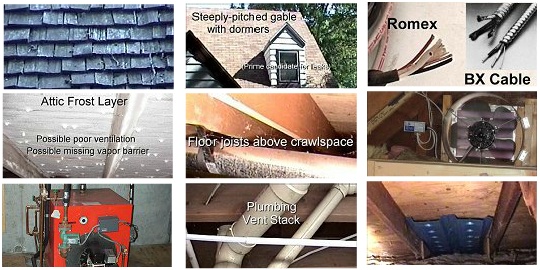
The course contains photos, diagrams, and illustrations for ease of learning and reference
The basic home inspection course contains 20 lessons you can master in as little as 1-2 weeks
This is the must-know information for home inspectors. When you have successfully completed the basic course you will be ready to start inspecting homes.
Aligned with National Standards
There are components and systems that you are required to evaluate and include in your report. These include the Site, Grounds, Grading, Exterior, Structure, Roof, Plumbing, Electric, Attic, Insulation, Ventilation, Interior, Bathrooms, Kitchen, Basement or Crawlspace, Heating, Air Conditioning, and Garage or Carport.
The course will show how to inspect each required component. You will learn through online testing, flash cards and by completing field assignments.
Advanced Home Inspector Training
Also included is a 13-lesson Advanced Course to help you recognize proper construction techniques and component installation. The Advanced Course contains the information needed to pass the National Home Inspector Examination (NHIE), which requires detailed knowledge from several licensed trades. Some states require passing the NHIE to become licensed.
Advanced Course Topics
The Advanced Course covers greater details about the Structure, Exterior, Roof & Chimney, Plumbing, Electric, Insulation, Ventilation, Interior, Heating & Fireplace, Cooling, Pools & Irrigation, Analysis, Reporting, Ethics, Business Operation, Sales and Marketing. The Advanced Course can also be used for continuing education credits (CECs).
Online certification exam and practice tests
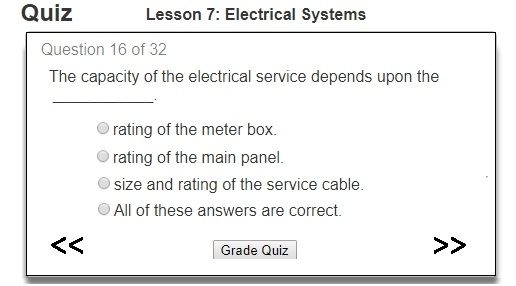
The course contains online practice tests, lesson quizzes, and exams. The course provides instant feedback on quizzes/tests and shows you what you missed so you can go back and review as much as wanted. There is no maximum limit to the number of times you can take the quizzes/tests so you can repeat the questions until you are confident that you know the material and achieve a passing score.
The course includes hundreds of online, interactive flashcards to help you practice the objectives for each lesson. Flash cards are a learning retention tool rather than a quiz, which allows you to practice the main ideas from a particular lesson prior to taking a test. The flashcards quiz you over what you are expected to know prior to taking an end-of-lesson quiz. You can then go back and review the relevant course material. You can easily skip flashcard questions you already know by clicking to the next flashcard.
The course includes hundreds of online, interactive flashcards to help you practice the objectives for each lesson. Flash cards are a learning retention tool rather than a quiz, which allows you to practice the main ideas from a particular lesson prior to taking a test. The flashcards quiz you over what you are expected to know prior to taking an end-of-lesson quiz. You can then go back and review the relevant course material. You can easily skip flashcard questions you already know by clicking to the next flashcard.
Quiz/Flashcards Example Screenshot
Self-paced lessons available on-demand
The course lessons are self-paced and available on-demand 24/7. There are no set times you need to be online taking the course and you may spend as much or as little time reviewing the lessons as you'd like. The lessons contain text that you read, audio clips, streaming videos, color illustrations, diagrams, and flashcards to help you learn the material. You may jump around in the course and repeat lessons and you can always go back and review lessons at your convenience.
Student-instructor forum and phone support 12 hours-a-day
Unlimited Student Support
 If you any questions or problems, we are always a toll free phone call away 12 hours a day on weekdays and 8 hours on Saturdays. The course also has a student-instructor forum where you can post questions to the instructors and get answers that way or see frequently asked questions/answers asked by other students. Our goal is to help you succeed in the wide-open field of professional home inspection.
We pride ourselves in taking care of students after enrollment with great support and discounts on other products and future courses. You can call 605-427-2908 to speak to us or you can use our Online Course Support system to quickly get your question directly to us at any hour or day of the week. We answer every question as quickly and completely as possible.
Start training today, and get ready to start your new career as quickly as you want, backed by PHII professional support!
Learn at your own pace
The Basic and Advanced Courses are rated at 90 hours and 32 hours respectively. These estimates are for someone with no experience coming into the course. However, students can move through the lessons as quickly or as slowly as they wish so the time it takes may vary depending on the individual. Typically, the courses can be completed in 2-3 weeks if you are working at it pretty steadily. You also have the flexibility to stretch the courses out over a period of a few months if you get busy doing something else and only want to do the course part-time. The courses have no set expiration times so you can take the lessons at your own convenience!
Course Lessons
Estimated 90 Hours
- Introduction to Home Inspection Terminology
- Limits and Exclusions for Home Inspections
- Site, Grounds and Grading
- Exterior and Structure
- Roof Components
- Plumbing Systems
- Electrical Systems
- Attic Inspection
- Insulation & Ventilation
- Interior Components
- Bathrooms and Kitchens
- Basement & Crawlspace
- Heating and Air Conditioning
- Garage and Carport
- Conducting a Home Inspection
- Home Inspection Business Start-Up
- Mold and Allergens
- Radon in Air and Water
- Commercial Inspections
Course Objectives
Course Objectives
- Introduction to Home Inspection Terminology - Overview of the common language used throughout the home inspection industry by licensed home inspectors
- Limits and Exclusions for Home Inspection - Pre-inspection agreements and liability during a home inspection, understanding home inspector responsibilities
- Site, Grounds and Grading - Components outside the home including paving, vegetation, ground slope and drainage, decks, steps and porches that apply to a home inspection
- Exterior and Structure - Foundation, chimneys, trim and siding, doors and windows, eaves, soffits, and down spouts
- Roof Components - Types and styles, roof materials and home inspection methods, flashing and gutters, skylights for a typical home inspection
- Plumbing Systems - Water and fuel service type, size and location, waste and vent pipes, kitchen and bathroom faucets and fixtures, water heaters
- Electrical Systems - Service entrance location and capacity, inspecting panels and branch circuits, wire gauges, determining grounding and bonding, ground fault interrupters (GFIs), outlets, fixtures, switches and smoke detectors
- Attic Inspection - Attic access methods, roof framing and sheathing, insulation types, ventilation methods, roof vent pipes, defects and moisture issues
- Insulation & Ventilation - R Factor, vapor retarders, crawl space and below-grade ventilation, theory of exhaust and plumbing ventilation as it applies to home inspection
- Interior Components - Home inspection methods and standards for walls and rooms, bedroom egress, windows, types of doors, stairs and railing, defects, fire places
- Bathrooms and Kitchens - Toilets, sinks, ventilation, bathtubs, showers, flooring, GCFI protection, defects and moisture damage, cabinets, counters, flooring, built-in appliances following home inspection industry standards
- Basement & Crawlspace - Type and entry methods, evaluating foundation and supports, stairs, flooring, walls, ceiling, exposed insulation, vapor barriers, evaluating joists, trusses, sub floors, floor drains and sump pumps
- Heating and Air Conditioning - Location(s), fuel type(s), age, capacity, distribution methods, heat exchangers, combustion venting, humidifiers, air filters, evaporator and condenser coils, supplemental heat, electrical disconnect home inspection standards
- Garage and Carport - Home inspection standards for identifying structure type, attached, detached, door openers, floors ceiling walls, ventilation, safety features, separation wall, door to a living space, ventilation, GFI protection
- Conducting a Home Inspection - Pre home inspection agreements, professional behavior, procedures with clients, home inspection methodology, home inspection tools, written report, follow-up
- Home Inspection Business Start-Up - Registration for home inspection business, website set-up, payment processing, pricing services, business vehicle, ladders and basic tools, electronic tools, sales tax and write-offs, filing requirements, state tax I.D. number, records, profit, cash flow, advertising, brochures, tracking ads, customer service
- Mold and Allergens - Mycotoxins and pathogenic molds, sources and outbreaks, collecting samples during home inspection, client agreements, findings, common allergens, health effects, mitigation procedures, how to become a mold certified home inspector
- Radon in Air and Water - Properties of radon, health effects, how radon enters buildings and water supplies, measurement, elevated/unsafe levels, seasonal effects, mitigation methods, how to become a radon certified home inspector
- Commercial Inspections - Types of commercial home inspections, challenges, ASST. E2018-01 guidelines, property condition assessment (CPA) reports, walk-through survey, home inspector vs. a field observer, entering the market, referrals, liability, how to become a home inspector with commercial certification
Course Lessons
Estimated 32 Hours
- Structural Systems
- Exterior & Site Conditions
- Roof & Chimney Systems
- Plumbing Systems
- Electrical Systems
- Insulation Systems
- Ventilation Systems
- Interior Components & Appliances
- Heating & Fireplace Systems
- Cooling Systems
- Pool & Irrigation Systems
- Analysis and Reporting
- Business Operation and Ethics
Purpose
The Advanced Course is included to give more in-depth information on some of the more complicated aspects of home inspection - including: electrical, HVAC, plumbing and more. The Advanced Course is designed to act as a study guide to help prepare you for the state/province or national licensing exams. The Advanced Course is included for free along with the Basic Home Inspection Course.
